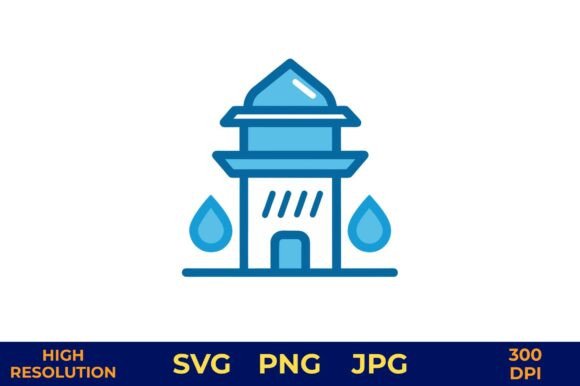
Blue House Collecting Rainwater
As an embroidery designer and product reviewer, I’ve evaluated countless designs for real-world use. Blue House Collecting Rainwater caught my attention not just for its visual appeal but for how it translates to practical embroidery projects. This vector illustration of a rainwater harvesting house with water droplets and a storage tank is more than just a graphic—it’s a design that can elevate a wide range of handmade and commercial products.
First Impressions: A Design That Speaks to Sustainability and Craft
The first thing I noticed about Blue House Collecting Rainwater is the way it balances simplicity with detail. The house is clean and modern, with subtle lines that suggest both function and aesthetics. Water droplets add a playful touch, while the storage tank gives it a sense of purpose. It’s a design that feels like it belongs in a handmade or eco-conscious project, making it ideal for sustainable brands, green-themed gifts, or educational materials.
The layout is well-structured, with enough space to work with on most standard hoop sizes. The theme is clear—rainwater collection—and that makes it easy to imagine how it could be used in different contexts. Whether it’s on a tote bag, a sweatshirt, or a baby onesie, the design has a friendly, approachable vibe that would resonate with many customers.
Real-World Embroidery Use Cases
When I think about where Blue House Collecting Rainwater fits best, I see it as a strong candidate for custom apparel, especially in the form of a tote bag design or a sweatshirt embroidery. Its size and shape make it suitable for mid-sized hoops, which is great for small business owners who want to offer unique, personalized items without overcomplicating their workflow.
This design also works well as an embroidered patch, perfect for adding to jackets, backpacks, or even pet collars. It’s the kind of design that could become a signature element for a craft business focused on nature or sustainability themes. For Etsy sellers or boutique shops, it’s a versatile asset that can be used across multiple product types, from kitchen towels to holiday gifts.
I can see it being used in baby items too—perhaps as part of a nursery decor set or on a onesie. The soft, clean lines make it gentle and unobtrusive, which is important when designing for children. It’s also a good fit for personalized gifts, such as embroidered caps or aprons, where the message of sustainability can be subtly communicated through the imagery.
Where to Be Cautious: Design Limitations and Fabric Considerations
While Blue House Collecting Rainwater is a solid design, there are some areas where care is needed. If you’re working with small hoop sizes, this design might be too large to fit comfortably. You may need to adjust the scale or consider alternative placements depending on your machine’s capabilities.
On textured fabrics, thin fabric, or stretchy materials, the details might not come through as clearly. The stitch density and stabilizer choice will play a big role in how the design looks after stitching. For dark fabrics, the contrast between the design and the background should be tested before finalizing any project.
If you plan to use it on curved surfaces like caps or on products that require frequent washing, it’s wise to test the design on a sample piece first. The intricate parts, like the water droplets and the edges of the storage tank, could be prone to fraying or distortion if not handled properly.
Visual Appeal and Customer Perception
One of the strengths of Blue House Collecting Rainwater is how it adds value to a finished product. It’s not just a decorative element—it tells a story. Customers who see this design on a tote bag or a sweatshirt may associate it with environmental consciousness, which can enhance brand consistency and customer trust.
From a design perspective, it’s also a great conversation starter. Whether it’s used in a holiday gift, a personalized item, or a commercial embroidery project, the visual appeal of the design can help differentiate a product from the competition. It’s the kind of design that can make a handmade product feel more special and intentional.
Practical Designer Notes: Test Before You Sell
Before using Blue House Collecting Rainwater in any project, I recommend testing it on scrap fabric. This will help you understand how the stitch density affects the final look, especially if you’re planning to use it on delicate or stretchy materials.
Check thread color contrast, particularly if you're using it on dark or light backgrounds. Also, review the design for any tiny details that might get lost during stitching. A black and white mockup can help you see how the design holds up without color distractions.
Make sure the design works for both personal and commercial projects, and always confirm the licensing terms before selling anything. If you’re an Etsy seller or a digital product seller, this design could be a valuable addition to your library of design assets.
Final Thoughts: A Design That Works Well in the Right Context
Blue House Collecting Rainwater is a thoughtful, well-crafted design that offers a lot of potential for creative entrepreneurs. It’s not overly complex, but it has enough detail to stand out in a variety of applications. Whether you’re a small shop owner, a craft business operator, or a hobbyist looking to expand your offerings, this design could be a useful addition to your embroidery projects.
Just remember to test it thoroughly, consider the fabric and hoop limitations, and ensure it aligns with your brand’s aesthetic and messaging. With the right approach, Blue House Collecting Rainwater can become a staple in your collection of machine embroidery designs.